




From risk signal to intent: Connecting identity, authentication and transaction context
JP Blaho, Senior Product Marketing Director


A customer recovers access to their account, adds a new payee, and initiates a payment. It could be an entirely legitimate sequence. Someone replaces a phone, resets their access, and pays a contractor. It could also be an account takeover. Or the customer could be following instructions from someone pretending to protect their money.
The steps look similar. The protection each situation requires can be very different.
Throughout this series, I’ve made the case for a layered approach to fraud prevention. The opening article argued that institutions need confidence in three things: identity, risk, and intent. The device intelligence article looked at what the environment reveals, and the behavioral intelligence article examined how the interaction unfolds. This final article connects those layers to the practical question that matters most: Once risk increases, what should the institution actually do?
What identity and authentication reveal
Consider the account recovery at the beginning of our example. Identity verification helps establish that the person requesting access is who they claim to be. During recovery, it can help reconnect the account to its rightful owner when normal credentials or authenticators are unavailable.
Authentication shows that someone controls a trusted credential linked to the account, such as a registered device, a passkey, or another approved method. These controls serve related but distinct purposes. Reconfirming identity helps establish who should regain access. Authentication helps protect what happens after that.
Recovery also changes the basis for trust. If a customer’s old phone was lost and a new one was registered an hour ago, the first successful login on that phone is only as trustworthy as the recovery that put it there. A device securely established months earlier carries a very different history.
The decision at this stage is whether there is enough confidence to restore access—and what additional scrutiny should follow.
What successful verification can still miss
Now the customer adds a payee and initiates a substantial payment. Successful recovery and authentication provide useful evidence. They do not settle whether this payment should proceed.
The institution needs transaction-specific assurance: confidence about the particular action being requested. That includes the recipient, amount, timing, payment history, and events leading up to the request. Where supported, approval can be securely linked to the specific payment details, helping protect against substitution or alteration.
But even an accurate display and valid approval have limits.
A customer may knowingly approve the amount and recipient shown while misunderstanding why they are sending the money. A scammer may have convinced them that the destination is a bank-controlled “safe account.”
This is the intent question raised at the start of the series. Confirming the action is different from confirming that the customer understands the circumstances. Intent cannot be read directly from a successful authentication, a behavioral score, or a confirmation screen. Institutions can gather evidence and ask relevant questions. They still need to account for uncertainty.
What the other layers add
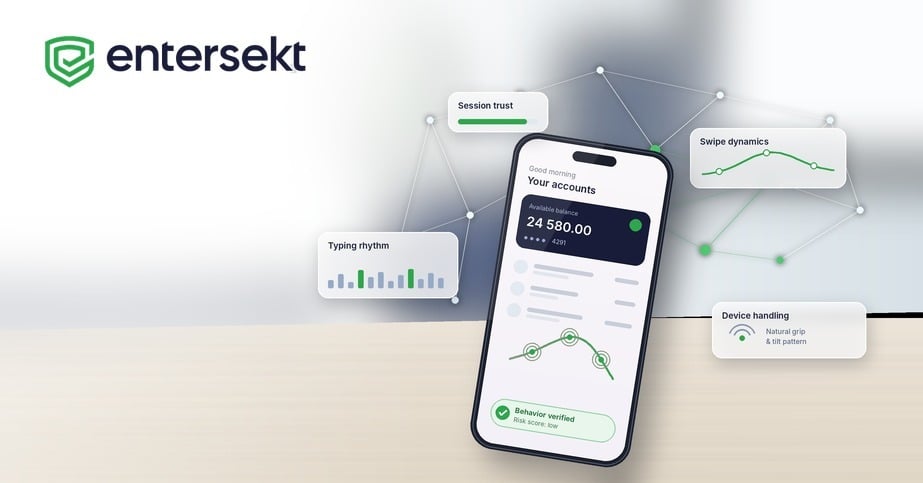
This is where the risk layers earn their place. The recovery, new payee, and payment become more informative when assessed together. Device evidence might indicate a replacement phone, a suspicious environment, or observable remote-access activity. Behavioral intelligence might identify interaction patterns that warrant attention, although unusual behavior can also have innocent explanations. Transaction context adds the payment’s destination, value, and departure from established activity.
Each layer helps interpret the others. A new device following a well-supported recovery may be expected. A new payee may be routine. A large payment may be appropriate for that customer. Their significance changes when they occur together, particularly if recovery was weakly supported or other evidence suggests compromise.
The same discipline applies to reassuring evidence. A familiar device should contribute confidence without canceling concerns about the recipient or the circumstances.
The institution’s task is to assess what the combined evidence supports, what remains uncertain, and which response could resolve that uncertainty or reduce potential harm.
How the decision changes
Orchestration connects that assessment to an action. It carries relevant context between recovery, payee creation, and payment initiation, applies policy, and reassesses the journey after an intervention.
For our running example, several responses may be appropriate:
-
Allow: Recovery is well supported, the environment is credible, and the subsequent activity has a reasonable explanation. Let the customer complete the payment with the level of protection the situation requires.
-
Authenticate: Evidence suggests stolen credentials or unauthorized access. Require an appropriate stronger method using an authenticator whose trust remains intact.
-
Reconfirm identity: The recovery process leaves material doubt about who regained control. Resolve that doubt before granting further sensitive access.
-
Deliver a targeted warning: Evidence suggests the customer may be following fraudulent instructions. Address the suspected scenario—for example, someone telling them to move money to protect it.
-
Delay: Material concerns remain and a pause could create an opportunity to interrupt the scam, subject to the institution’s policies and applicable requirements.
-
Review: The evidence is conflicting or the potential harm warrants investigation. Give the reviewer the connected journey and the reasons for escalation.
These actions can form a sequence. A warning may prompt the customer to disclose that someone is coaching them. A failed authentication may strengthen the case for restricting access. A review may establish a legitimate explanation and release the payment. The response should change as the evidence changes.
Stronger authentication needs a clear purpose
Stronger authentication is valuable when the unresolved question concerns access or control. An attacker with a stolen password may be unable to satisfy a securely established, phishing-resistant authentication requirement.
Suspected manipulation presents a different problem. The legitimate customer may possess the correct authenticator and complete every challenge. Asking them to approve again may simply give the scammer another step to coach them through.
A useful intervention needs to address the suspected deception. A specific warning can explain that the bank will never ask a customer to transfer money to a “safe account.” A carefully designed question can surface whether someone is directing the payment. A pause or specialist review can provide further protection when the concern remains unresolved. Authentication continues to matter. Its success should answer the question it was designed to answer, while the institution addresses the remaining risk.
Measure what happens to the customer—and the business
The value of this strategy becomes visible in outcomes. Institutions should assess prevented losses alongside legitimate transaction completion, customer friction, and operational burden. That means examining abandonment and repeated challenges, as well as investigation volumes, recovery contacts, support calls, and handling times.
More alerts can create more work without improving protection. Fewer challenges can conceal weaker controls. Neither measure tells the whole story. The business question is whether customers can complete legitimate journeys securely, while interventions prevent harm and avoid unnecessary work.
That connects fraud strategy directly to secure self-service. A well-designed recovery journey can help a customer regain access without calling for help. Appropriate authentication can protect sensitive actions while allowing routine activity to proceed smoothly. When assistance is necessary, connected context can help staff understand the situation and resolve it more efficiently.
Bringing the layers together
Return to the customer who recovered access, added a payee, and initiated a payment. No single control could say which of the three stories was true. Identity verification and authentication help establish who is acting. Device and behavioral intelligence show whether the environment and the interaction fit that customer. Transaction context reveals what is actually being requested—and whether the customer may be acting on someone else’s instructions.
Together, these layers let the institution match its response to the situation: a smooth path for the legitimate customer, stronger controls for the intruder, and a timely interruption for the customer being deceived. That is the layered approach in practice. Evidence informs a decision, the decision shapes the customer journey, and the outcome determines its value.
As you assess your own approach, three questions are worth asking:
-
Can your controls tell an account takeover apart from a customer being manipulated, and respond differently to each?
-
Does each intervention answer a specific question, or does it simply add another step?
-
Are you measuring legitimate completions, customer friction, and support demand alongside prevented losses?
These decisions affect much more than the payment in question. They influence whether customers can help themselves, whether staff need to intervene, and how much the institution spends resolving problems afterward.
Stay up to date: on-demand webinar coming soon
In our upcoming webinar, 'The Best Support Call Never Happens: How strong authentication turns secure self-service into real operational savings,' we’ll explore how institutions can prepare for evolving fraud threats in 2027 while improving authentication, recovery, and customer support.
We'll examine how adaptive authentication can enable secure self-service, reduce avoidable support demand, and support a business case that connects fraud prevention with customer experience and measurable operational savings.
Watch this space for more details.