





Privacy and data exposure risks arise when sensitive information is collected, inferred, shared, accessed, or retained beyond what people expect or what an organization can protect. In financial services, the exposure surface includes identity records, payment details, behavioral signals, and data created or used by AI agents.
Privacy and data exposure are closely connected to authentication and fraud prevention. The same signals that help a bank recognize a trusted customer can create privacy risk if they are collected without a clear purpose, retained too long, shared too widely, or exposed in a breach. This entry explains the four risk areas, the controls that reduce them, and the governance questions financial institutions should answer.
Key takeaways: Privacy and data exposure risks
- Identity data can enable account takeover, impersonation, discrimination, and long-term loss of personal control after exposure.
- Payment data requires protection across collection, processing, transmission, storage, authorization, and dispute workflows.
- Behavioral data can improve risk decisions, but it may reveal sensitive patterns about people and their circumstances.
- Agent data adds delegated authority, tool access, prompts, instructions, and action histories to the privacy risk model.
- Entersekt connects authentication and risk signals so financial institutions can make more targeted decisions about high-risk activity.
What does privacy and data exposure mean?
Privacy risk concerns how data affects an individual’s rights, expectations, safety, and ability to control information about them. Data exposure is the loss of control that occurs when information is disclosed, accessed, inferred, transferred, or retained in an unsafe or unexpected way.
Exposure does not require a public breach. Excessive collection, unclear consent, unnecessary internal access, weak retention rules, or an inaccurate risk profile can also create privacy harm. A useful assessment therefore examines the entire data lifecycle, not only the security of a database.
Why are identity data risks significant in banking?
Identity data includes information used to recognize or verify a person, such as names, contact details, account identifiers, identity documents, biometric templates, and authentication records. Once exposed, these data can be reused across services and may be difficult for an individual to replace.
Financial institutions should separate identity proofing from authentication. Identity proofing establishes that a person is who they claim to be during enrollment or recovery. Authentication checks whether the person requesting access or approving an action is linked to that identity. Strong controls should protect both stages, along with account recovery and high-risk changes.
Privacy-aware authentication also limits unnecessary tracking. Entersekt’s silent authentication approach uses cryptographic endpoint signals to recognize trusted activity without relying on cross-site tracking mechanisms. The principle is important: a signal can support fraud prevention without becoming a general-purpose record of a person’s online life.
How can payment data be exposed?
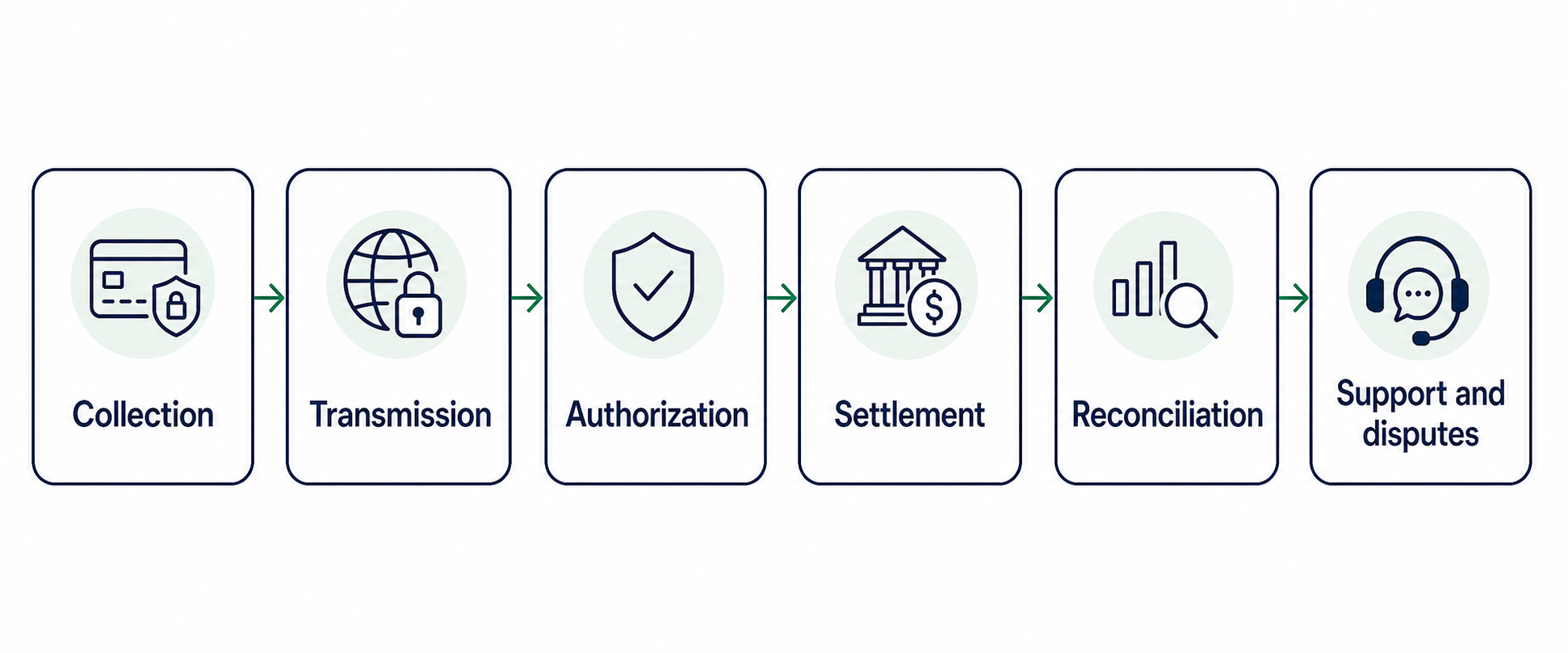
The PCI Data Security Standard establishes a baseline of technical and operational requirements for entities that store, process, or transmit payment account data. Authentication and authorization controls should support that broader environment rather than operate as an isolated login function.
What makes behavioral data privacy-sensitive?
Behavioral data records how a person interacts with a service. Examples include navigation patterns, typing rhythm, device handling, transaction habits, session timing, location context, and changes from a customer’s established pattern. These signals can help identify unusual activity, but they may also reveal sensitive information about a person’s routines and circumstances.
Behavioral authentication uses these patterns as risk signals rather than treating them as definitive proof of identity. A responsible design should document the purpose of each signal, assess its accuracy and impact, restrict access, and explain how it influences decisions. It should also support review or appeal when an automated decision affects a customer.
Entersekt’s behavioral authentication guidance frames behavior as one part of a broader decision that can include device, network, location, and transaction context. That approach reduces the risk of turning one data category into an unquestioned identity verdict.
Watch our video, Behavioral biometrics vs behavioral analytics in RBA, to understand how the approaches differ and how they inform risk-based authentication.
What are agent data risks?
Agent data is information created, observed, or used by software agents that can interpret instructions and take actions. It may include prompts, retrieved records, tool calls, permissions, transaction limits, approval events, outputs, and audit logs. In financial services, the central question is who or what has authority to act.
Agentic workflows create risks that differ from ordinary application access. An agent may receive more data than it needs, retain sensitive context in logs, follow a manipulated instruction, call an unapproved tool, or perform an action outside its intended scope. A compromised agent identity can also create a path to payment fraud or unauthorized account changes.
Instruction drift occurs when an agent’s actions move beyond the user’s original instruction or approved scope, potentially exposing data or triggering unauthorized actions.
Agent access needs boundaries
Define the scope
Give each agent a clear identity, purpose, permitted data and authority level.
Check sensitive actions
Require appropriate human or customer approval for high-risk activity.
Keep accountable records
Record what was permitted, what happened and which data was accessed. Apply access and retention controls to those records.
NIST’s Generative AI Profile is a useful risk-management reference, but it is voluntary and does not replace sector-specific obligations.
Our blog, When bots break the rules: How banks can safely harness AI for growth, explores how agent adoption can introduce data-exposure and access-control risks alongside evolving fraud threats.
How should financial institutions reduce data exposure?
Start with a data inventory that maps data elements, processing purposes, systems, owners, third parties, geographic locations, retention periods, and access paths. NIST’s Privacy Framework recommends this type of inventory and mapping as a foundation for managing privacy risk.
Then apply controls that match the data and the action. Minimize collection, separate identifiers from analytical data where possible, encrypt sensitive information, restrict privileged access, monitor unusual access, and remove data when the purpose ends. Test recovery and breach procedures instead of treating them as documentation exercises.
Where supported, selective disclosure can limit shared identity or payment evidence to the attributes needed for a particular decision, rather than exposing an entire record.
Authentication should also be risk-aware. Entersekt’s Authentication Advisor is designed to use real-time context and behavioral signals to guide authentication decisions. In practice, this supports a more targeted response: lower-risk activity can follow a lighter path, while higher-risk actions receive stronger scrutiny.
Which standards and regulations shape these risks?
Applicable requirements depend on geography, role, product, and data type. The GDPR sets principles for processing personal data in its scope, while national privacy laws and sector rules may add requirements. The EDPB describes a personal data breach as including unauthorized disclosure or access and explains that certain breaches may require notification to a supervisory authority within 72 hours.
For payment environments, PCI DSS establishes baseline controls for payment account data. For privacy governance, the NIST Privacy Framework offers a voluntary risk-management structure. For AI systems, the NIST AI Risk Management Framework and its Generative AI Profile help organizations consider trustworthy and privacy-enhanced design.
These references are not interchangeable. A privacy framework does not replace payment security requirements, and payment compliance does not answer every question about behavioral profiling or agent authority. Use them together with applicable law, contractual duties, internal policies, and documented risk assessments.
How do privacy and fraud prevention work together?
Privacy and fraud prevention support the same customer outcome when data collection is purposeful, proportionate, controlled, and explainable. The objective is to use enough context to detect risk while avoiding unnecessary surveillance or permanent records of ordinary behavior.
Entersekt’s platform links authentication, payment security, device intelligence, and behavioral context to inform decisions across banking interactions. The privacy question remains essential: what signal is needed for this decision, who can access it, how long is it retained, and what happens when the signal is wrong?
Our blog, Detection isn’t enough: Why banks need layered authentication, explains how identity, device, behavioral and transaction signals can support targeted intervention rather than collecting every possible data point or applying the same challenge to every interaction.
Organizations can reinforce this relationship through privacy impact assessments, data protection reviews, access governance, model monitoring, customer notices, and clear escalation paths. Good controls protect both the transaction and the person behind it.
Practical questions for a data exposure review
- Which identity, payment, behavioral, and agent data elements are collected?
- What specific purpose does each element serve?
- Which signals are necessary for authentication, fraud detection, or authorization?
- Who can access the data, including vendors, analysts, support staff, and agents?
- How are retention, deletion, correction, and customer access handled?
- Can you reconstruct an automated decision and the data that influenced it?
- What controls stop an agent from exceeding its delegated authority?
- How quickly can you detect, contain, assess, and report an exposure?
Sources and related articles
- NIST Privacy Framework
- European Data Protection Board guidance on personal data breaches
- PCI Data Security Standard
- NIST Generative AI Profile
FAQs about privacy and data exposure risks
➡️ The difference between privacy risk and data security risk?
Privacy risk concerns how data processing affects people, while data security risk concerns unauthorized access, alteration, loss, or disclosure. Entersekt uses authentication and risk signals to help protect sensitive interactions, but governance must also define purpose, access, retention, and customer rights.
➡️ Can behavioral authentication protect privacy?
Behavioral authentication can support privacy when it uses limited, relevant signals for a defined security purpose. Entersekt combines behavioral context with device and transaction signals so a single pattern does not become the sole basis for an identity decision or an unrestricted customer profile.
➡️ Why is payment data different from other personal data?
Payment data can enable unauthorized transactions and may be subject to specific security requirements. Entersekt’s payment authentication capabilities help issuers and payment participants assess transaction risk, while PCI DSS defines baseline controls for environments handling payment account data.
➡️ What should an AI agent be allowed to access?
An AI agent should access only the data and tools required for its defined task, with explicit limits on actions and transaction value. Entersekt’s context-aware approach illustrates the same control principle for authentication: inspect the situation, apply the appropriate challenge, and retain an audit trail.
➡️ What should happen after a data exposure?
After an exposure, contain access, preserve evidence, assess affected data and people, meet applicable notification duties, and correct the control weakness. Entersekt’s Trust Center offers public information about its security, compliance, and privacy practices for due diligence: Entersekt Trust Center.